


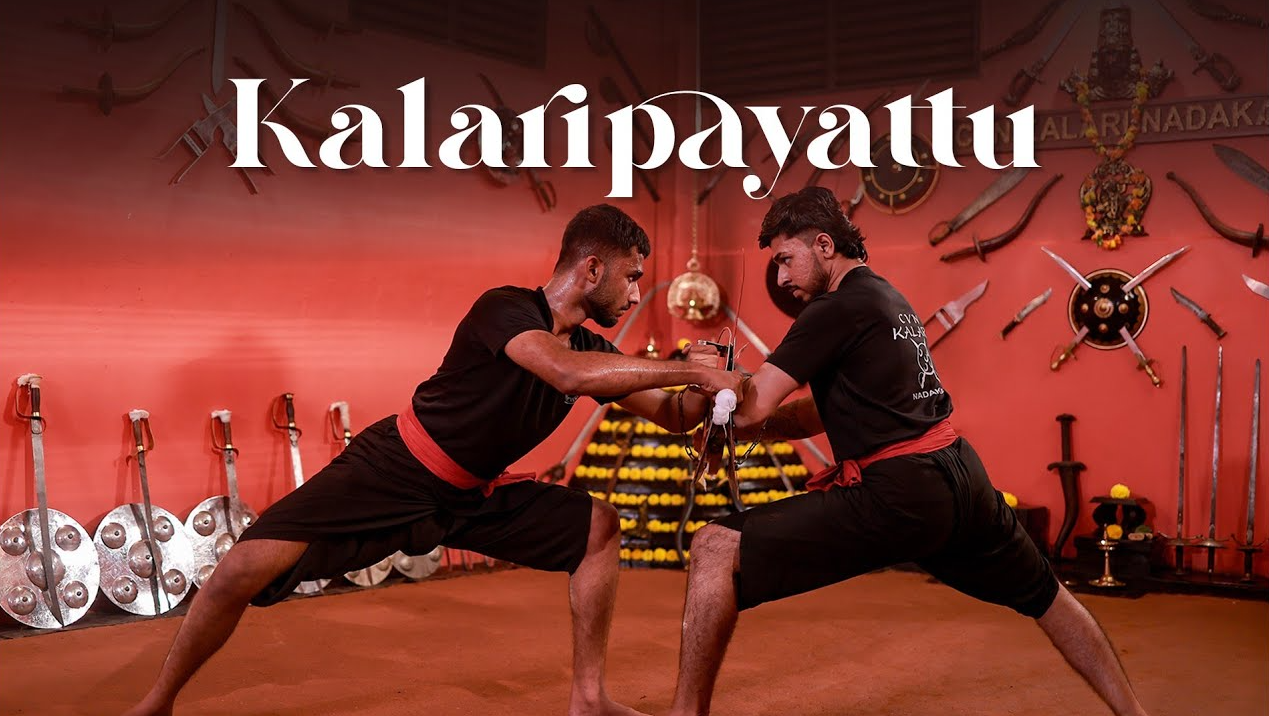
Before the Shaolin monks developed kung fu. Before Japanese samurai codified kenjutsu. Before any of the world’s celebrated martial traditions achieved their recognizable forms, something was already happening in Kerala’s tropical landscape that would eventually be recognized as humanity’s oldest surviving codified combat system. Kalaripayattu doesn’t just claim ancient origins — it carries them visibly in every movement, philosophy, and training methodology that practitioners maintain today with the same devotion that Kerala communities have sustained across three thousand years of continuous tradition.
Dbbet engages with martial arts heritage as genuine cultural and competitive territory — recognizing that kalaripayattu martial art represents something genuinely unique within the global combat sports conversation. Understanding kalaripayattu oldest martial art claims, its relationship to broader indian martial arts traditions, and its contemporary relevance provides essential context for appreciating what makes this discipline simultaneously ancient and urgently current.
The Kalari: Training Space as Sacred Architecture 🏛️
Understanding kalaripayattu requires understanding the kalari — the specific training space whose architectural design reflects deep philosophical understanding of how physical and spiritual development intertwine. The kalari isn’t simply a gymnasium. It’s a carefully constructed sacred space whose dimensions, orientation, and internal organization all carry meaning that practitioners understand as fundamental to the training that happens within it.
Traditional kalaris are built partially below ground level — seven steps descending from the entrance to the training floor creates a spatial transition that practitioners interpret as movement from ordinary consciousness into disciplined awareness. The lower floor level also provides practical structural benefits — maintaining cooler temperatures and creating ceiling heights that allow the jumping and aerial techniques that kalaripayattu’s advanced training requires.
The southwest corner houses the puttara — a seven-tiered platform containing representations of the deity Shiva and the gurukkal’s lineage masters. Training begins and ends with ritualized acknowledgment of this spiritual foundation — embedding combat technique development within philosophical and devotional frameworks that distinguish kalaripayattu from purely physical combat training systems.
The Curriculum: From Body to Weapon 💪
Kalaripayattu’s training structure follows a progression whose logic reveals sophisticated understanding of how human physical capability develops most completely. The curriculum doesn’t begin with weapons — it begins with the body itself, spending years developing the foundational physical qualities that advanced practice requires before introducing external implements that could compensate for physical inadequacies without developing them.
Meithari forms — body conditioning exercises combining yoga-derived flexibility work with specific strength movements — occupy the earliest training years. These aren’t warm-up exercises or supplementary conditioning. They’re the primary curriculum, developing the body awareness, flexibility, and specific physical capacities that later technical work depends upon completely.
Kolthari — wooden weapon training — introduces the first external implements after meithari foundation is established. The long staff, short stick, and various wooden weapons develop distance management, timing, and the specific coordination that weapon technique requires while maintaining training safety during the learning phases where technique errors are most frequent.
Ankathari — metal weapon training — represents the curriculum’s most advanced layer, introducing sword, shield, spear, dagger, and the flexible sword called urumi. The urumi deserves specific attention — a weapon so dangerous that even experienced practitioners approach it with exceptional caution, its flexible blade capable of striking from unexpected angles that rigid weapons cannot replicate.
Marma: The Pressure Point Science 🔬
Kalaripayattu’s most sophisticated dimension — and the element most clearly distinguishing it from purely physical combat systems — is marma vidya: the science of vital pressure points located throughout the human body. This knowledge system identifies 107 specific anatomical points whose precise stimulation produces effects ranging from temporary pain or paralysis through serious injury to death.
This knowledge is simultaneously offensive and therapeutic. The same understanding of anatomical vulnerability that enables devastating combat application also underlies kalaripayattu’s healing tradition — kalari masters historically functioning as physicians within their communities, using marma knowledge to treat injuries, restore damaged function, and maintain community health alongside their martial teaching roles.
Marma vidya’s transmission is carefully controlled — considered too potentially dangerous for early-stage students, it’s shared only when masters are confident in students’ character development alongside technical proficiency. This selective transmission reflects kalaripayattu’s understanding that genuine martial knowledge requires ethical maturity rather than just physical skill.
The Gurukkal: Master as Complete Teacher
The gurukkal — kalaripayattu master — occupies a social role within Kerala’s traditional communities that extends far beyond combat instruction. Historically functioning simultaneously as martial arts teacher, physician, spiritual guide, and community leader, the gurukkal embodies kalaripayattu’s fundamental understanding that physical combat training cannot be separated from character development, spiritual practice, and social responsibility.
This comprehensive teaching role creates transmission challenges in contemporary contexts where students seek specific skill development rather than complete discipleship relationships. Authentic kalaripayattu transmission traditionally requires residential study with masters — the gurukkal-shishya relationship demanding total immersion that modern life rarely accommodates equivalently.
The lineage system through which gurukkal knowledge is transmitted creates family traditions of extraordinary depth — some kalari lineages maintaining continuous teaching traditions spanning thirty or more generations, accumulating refined understanding that individual lifetime learning cannot approach.
Indian Martial Arts Context: Kalaripayattu’s Place
Placing kalaripayattu within the broader indian martial arts tradition reveals both its distinctiveness and its connections to the diverse combat systems that the subcontinent has developed across millennia. India’s martial heritage extends far beyond kalaripayattu — encompassing silambam stick fighting from Tamil Nadu, gatka’s Sikh sword traditions, malla-yuddha’s ancient wrestling forms, and numerous regional systems whose documentation is less complete but whose cultural roots are equally genuine.
What distinguishes kalaripayattu within this diverse landscape is the systematic completeness of its preserved curriculum — the combination of unarmed combat, weapon training, philosophical framework, and healing knowledge maintained in documented, transmittable forms that other regional systems haven’t preserved equivalently across equivalent time spans.
The influence of kalaripayattu on other Asian martial arts traditions has been a subject of genuine scholarly interest — the historical movement of Buddhist monks from Kerala through Southeast Asia to China providing potential transmission pathways for techniques that reappear in recognizable forms within other celebrated Asian martial traditions.
Contemporary Revival and Global Spread 🌍
Kalaripayattu’s contemporary story involves both genuine revival within Kerala and significant international spread through diaspora communities, martial arts enthusiasts, and the performing arts connections that have made the discipline visible to global audiences who might never encounter it through purely sporting channels.
The performing arts connection deserves specific attention. Kalaripayattu’s influence on Kathakali — Kerala’s celebrated classical dance-drama form — is deep and bidirectional. The specific body control, expressive physical vocabulary, and training methodology that Kathakali demands drew from kalaripayattu tradition while simultaneously providing kalaripayattu practitioners with performing arts contexts where their skills reached audiences beyond traditional martial arts communities.
Film has amplified this visibility considerably — Indian cinema’s growing use of kalaripayattu-trained performers and choreographers bringing the discipline’s extraordinary physical vocabulary to mainstream audiences. The specific aesthetics of kalaripayattu movement — the low stances, jumping techniques, and weapons work — create cinematic visual qualities that film choreographers find genuinely distinctive.
Kalaripayattu and Modern Combat Sports
The relationship between kalaripayattu and contemporary combat sports — particularly MMA’s integration of diverse martial arts traditions — raises interesting questions about what ancient systems offer modern competitive athletes. Some elements translate directly: kalaripayattu’s extraordinary flexibility development, footwork sophistication, and weapons training coordination all create physical qualities that enhance performance in modern combat sports contexts.
Other elements — particularly the marma-based striking philosophy targeting specific anatomical vulnerabilities — don’t translate into modern competitive frameworks whose rules prohibit the specific techniques this knowledge informs. This creates a productive tension between preservation and adaptation that kalaripayattu practitioners navigate differently depending on whether their primary orientation is toward competitive sport, cultural preservation, performing arts, or personal development.
Preservation Challenges and Institutional Support
Authentic kalaripayattu transmission faces genuine preservation challenges that institutional support is attempting to address with varying degrees of success. The gurukkal-shishya residential transmission model that historically maintained curriculum completeness across generations is increasingly difficult to sustain within contemporary social contexts where students balance martial arts training with educational and professional commitments.
Kerala’s government has recognized kalaripayattu as cultural heritage requiring active preservation support — funding traditional kalaris, supporting master practitioners, and incorporating the discipline into cultural tourism initiatives that simultaneously generate economic activity and raise public awareness. The Sangha associations that connect kalari practitioners across Kerala provide institutional frameworks for curriculum standardization discussions that individual masters couldn’t conduct independently.
The Living Tradition
Kalaripayattu’s most remarkable quality isn’t its age — it’s its aliveness. Three thousand years of continuous practice haven’t produced a museum exhibit but a living tradition that continues evolving, adapting, and demonstrating its relevance across contemporary contexts its founders couldn’t have anticipated.
Young practitioners in Thiruvananthapuram and Kozhikode are learning the same fundamental movements — the same low stances, the same weapon techniques, the same marma awareness — that Kerala warriors developed across centuries of refinement. That continuity across three millennia of human history, maintained not through institutional mandate but through genuine community valuation, represents kalaripayattu’s most extraordinary achievement.
The oldest martial art survives not because it was preserved in amber but because each generation found it genuinely worth learning, teaching, and passing forward. That organic transmission is the truest measure of a tradition’s living value — and kalaripayattu passes it completely.
