


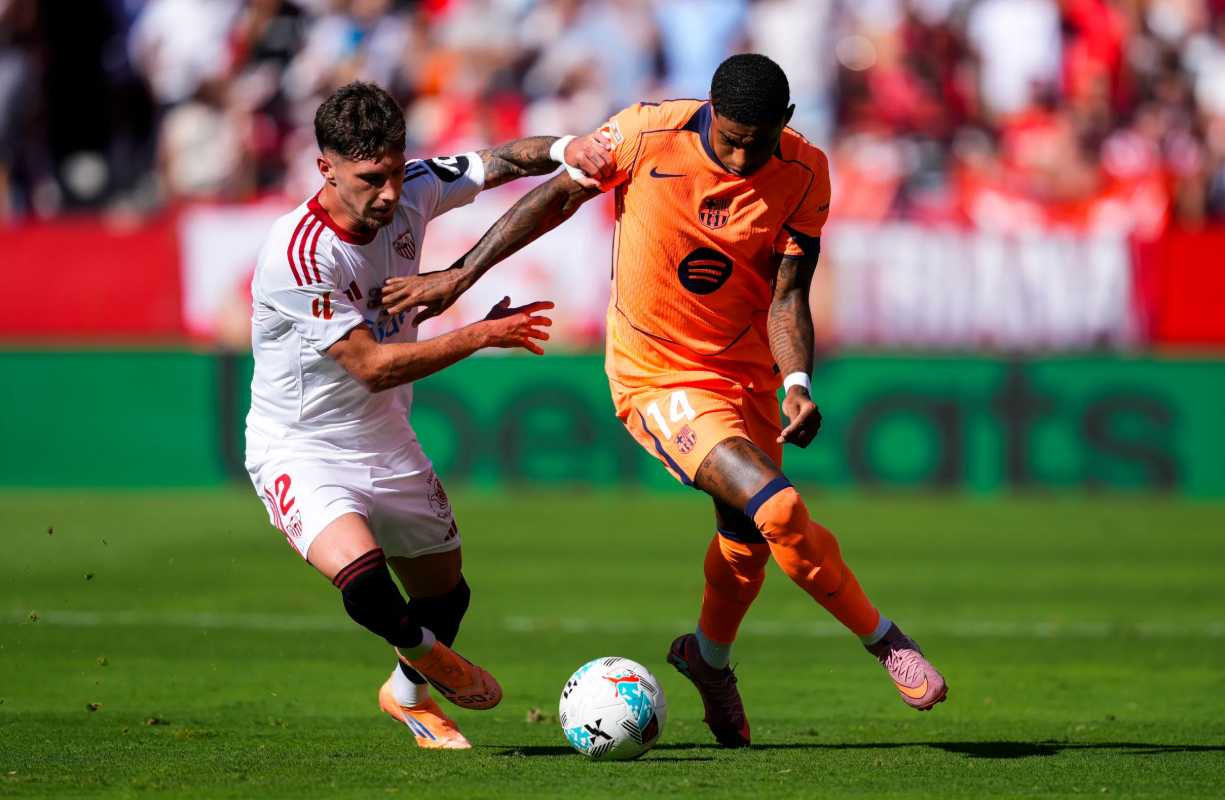
Few Spanish football rivalries carry the historical weight found whenever this Andalusian club faces off against the Catalan giants, a fixture that has produced everything from stunning upsets to comprehensive Barcelona victories throughout La Liga’s storied history. The 2025-26 season delivered a genuinely compelling narrative arc across both meetings between these clubs, swinging dramatically between competitive shock and expected dominance. Fans wanting to follow live scores and match coverage can check the latest updates at dbbet skachat, where La Liga action stays current throughout the season.
Sevilla FC: Understanding the Club’s Season Context
Sevilla FC entered the 2025-26 campaign facing considerable challenges, ultimately finding themselves embroiled in a relegation battle for much of the season despite occasional flashes of genuinely impressive competitive quality against stronger opponents.
The club’s form fluctuated dramatically throughout the campaign, with stretches of resilient, hard-fought draws against difficult opponents contrasted against extended winless runs that kept relegation concerns genuinely present deep into the season’s closing months.
This inconsistency made Sevilla a genuinely unpredictable opponent for the league’s stronger sides, capable of producing shock results against elite competition while simultaneously struggling to secure consistent points against sides theoretically closer to their own table position.
The First Meeting: Sevilla’s Stunning October Upset
The season’s opening meeting between these clubs took place on October 5, 2025, at Sevilla’s Ramón Sánchez Pizjuán stadium, producing a result that immediately reshaped the broader La Liga title conversation for the season ahead.
Sevilla delivered a comprehensive 4-1 victory over Barcelona, handing the Catalan side their first domestic defeat of the entire campaign and exposing defensive vulnerabilities that would continue drawing scrutiny throughout the remainder of the season.
This result proved particularly significant given Barcelona’s dominant early-season form, since the scale of Sevilla’s victory suggested genuine tactical vulnerabilities rather than simply an isolated off-day performance from the eventual league leaders.
Examining Sevilla FC vs FC Barcelona Lineups From the Return Fixture
Breaking down the sevilla fc vs fc barcelona lineups from the March 2026 return fixture reveals significant squad rotation on Barcelona’s side, reflecting fatigue management ahead of an upcoming Champions League commitment against Newcastle United.
Barcelona’s starting eleven featured a 4-2-3-1 formation with Joan García in goal, a back four of Xavi Espart, Pau Cubarsí, Gerard Martín, and João Cancelo, alongside a midfield pairing of Marc Bernal and Pedri behind an attacking line including Raphinha and Robert Lewandowski.
Sevilla countered with their own 4-2-3-1 setup, fielding Odysseas Vlachodimos in goal behind a defensive line of José Ángel Carmona, Tanguy Nianzou, Nemanja Gudelj, and Gabriel Suazo, with Djibril Sow and Lucien Agoumé anchoring their midfield.
Barcelona’s Decisive Return Fixture Victory
The March 15, 2026 return fixture at Camp Nou produced a dramatically different outcome from the earlier meeting, with Barcelona securing a commanding 5-2 victory that restored their four-point advantage atop the La Liga table.
This result extended Barcelona’s remarkable home form since returning to their renovated stadium, having won every single fixture played there across multiple competitions since their return, scoring three or more goals in every home victory during that stretch.
The scoreline also represented meaningful revenge for October’s earlier defeat, demonstrating how dramatically home advantage and squad rotation decisions can influence outcomes between these two clubs across a single competitive season.
Raphinha’s Hat Trick Performance
Brazilian winger Raphinha delivered the standout individual performance of the return fixture, scoring a hat trick that accounted for the majority of Barcelona’s five-goal tally and cemented his status as one of the league’s most dangerous attacking threats.
His performance included four completed dribbles and three key passes according to match statistics, demonstrating the well-rounded creative and finishing contribution that made him the decisive factor throughout Barcelona’s comprehensive victory over their Andalusian opponents.
This individual brilliance overshadowed contributions from teammates like João Cancelo, who also factored significantly into the scoring with an assist and goal of his own, highlighting Barcelona’s attacking depth even with a notably rotated starting lineup.
Sevilla FC vs FC Barcelona Stats: Breaking Down the Numbers
Examining sevilla fc vs fc barcelona stats from the March return fixture reveals significant statistical dominance from the home side, with Barcelona controlling sixty-three percent of overall possession throughout the match.
Barcelona also generated considerably more attacking output, registering fourteen total shots compared to Sevilla’s seven attempts, reflecting the clear territorial and creative dominance that ultimately translated into their five-goal offensive output.
Sevilla’s goals arrived as consolation strikes during stoppage time periods in both halves, statistical context that reinforces how thoroughly Barcelona controlled the match’s overall run of play despite Sevilla managing to find the scoresheet twice.
Head-to-Head History Between the Two Clubs
The broader historical rivalry between these clubs shows considerable Barcelona dominance overall, with the Catalan side holding a substantial advantage in total head-to-head victories across their extensive shared La Liga history.
Sevilla’s away record at Barcelona’s home stadium proved particularly difficult historically, having not secured a victory there since 2010, a statistic that made their earlier October triumph at their own stadium even more statistically significant by comparison.
This historical context helps explain why October’s result generated such significant discussion within Spanish football, since Sevilla’s convincing victory represented a genuine departure from the broader pattern of Barcelona dominance across this particular fixture’s extensive history.
Tactical Analysis: What Changed Between the Two Meetings
Barcelona’s tactical approach shifted considerably between fixtures, with manager Hansi Flick opting for significant lineup changes during the return match specifically to manage player fatigue ahead of crucial Champions League commitments.
This rotation initially raised questions about whether a weakened Barcelona lineup could handle a Sevilla side that had already demonstrated genuine capability against full-strength opposition during their earlier October meeting between these clubs.
Ultimately, the quality gap between the sides proved decisive despite Barcelona’s rotated lineup, though the match’s opening periods reportedly featured genuine defensive uncertainty before Barcelona’s superior individual quality gradually asserted control over the contest.
Sevilla’s Broader Season Struggles
Beyond this specific fixture, Sevilla’s season-long form told a considerably more difficult story, managing just two victories across their ten most recent league matches heading into the March meeting with Barcelona.
This inconsistent form kept the club uncomfortably close to relegation danger throughout much of the season, making their earlier upset victory over Barcelona feel increasingly like an isolated highlight rather than evidence of sustained tactical or competitive improvement.
Injury concerns and squad depth issues compounded these broader struggles too, with Sevilla managing just one clean sheet across their recent match stretch, statistical evidence of genuine defensive fragility extending well beyond this specific Barcelona fixture alone.
What This Rivalry Reveals About Modern La Liga Competition
These two contrasting results between the same clubs within a single season illustrate broader patterns within contemporary La Liga competition, where even dominant title contenders remain genuinely vulnerable to well-organized, motivated opposition on any given matchday.
Sevilla’s capacity to produce a comprehensive victory over eventual league leaders demonstrates that squad quality gaps, while significant, don’t automatically guarantee predictable outcomes across every single fixture throughout a lengthy competitive season.
Whatever final league positions these clubs ultimately secure, their two 2025-26 meetings provided genuinely compelling evidence of Spanish football’s continued competitive unpredictability, even amid Barcelona’s broader season-long title challenge and overall statistical dominance.
