


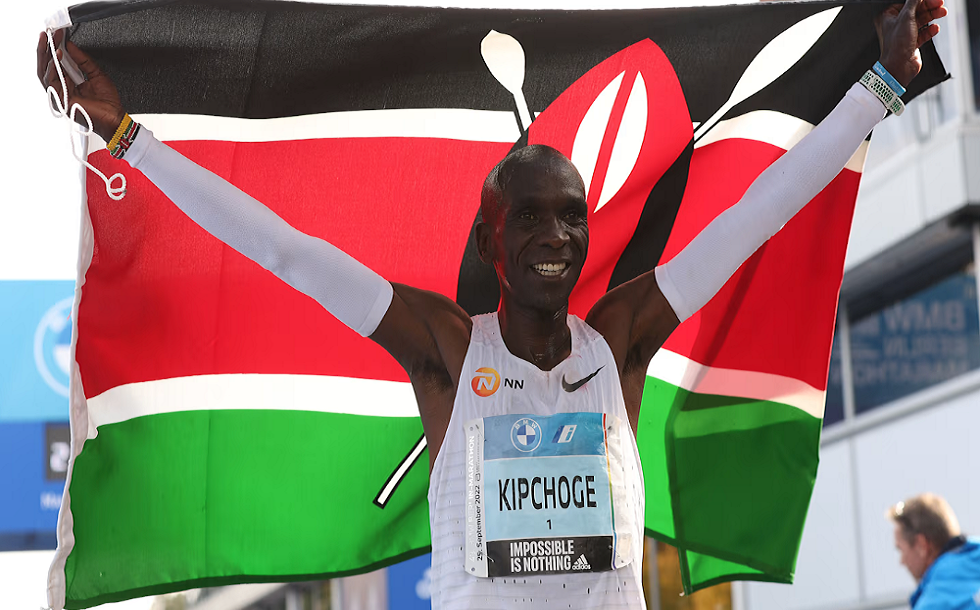
There are athletes who win races and athletes who change sports. Eliud Kipchoge belongs to the rarer second category — a runner whose performances have not merely accumulated medals but have fundamentally altered what the sport of marathon running understands about human endurance potential. The conversation around kipchoge is not primarily about records, though the records are extraordinary — it is about what his approach to training, competition, and the philosophy of running demonstrates about the relationship between disciplined preparation and human capability. Fans following Kenyan athletics and distance running broadly can find dedicated markets and coverage at db bet.
Eliud Kipchoge: The Man Behind the Legend
Eliud Kipchoge was born in 1984 in the Nandi Hills region of Kenya’s Rift Valley — the geographic and cultural heartland that has produced a disproportionate share of the world’s greatest distance runners across four decades of global athletics dominance. His entry into elite athletics came through the track — his 5000 meters World Championship gold at the 2003 Paris championships, won at nineteen years old against a field of established international runners, announced a talent whose composure under pressure was as remarkable as the physical ability driving his performance. The transition to marathon running that followed in his mid-twenties — initially regarded as premature by observers who believed his track career had more achievements to deliver — produced instead a progression through the marathon distance that rewrote every assumption about what the event’s ceiling looked like.
The Sub-Two-Hour Achievement: What It Meant
No single performance in distance running history carries the symbolic weight of Kipchoge’s sub-two-hour marathon completion in Vienna in 2019 — the Ineos 1:59 Challenge that produced a time of 1:59:40 across a course specifically designed to optimize conditions for the attempt. The achievement existed outside official world record parameters — the rotating pacemaker system, the flat course design, and the controlled conditions meant it could not be ratified as a world record — but its significance transcended record books into a different category of sporting moment. Breaking the two-hour barrier was to marathon running what Roger Bannister’s four-minute mile was to middle distance — a psychological threshold whose crossing permanently recalibrated what human endurance was understood to be capable of. That Kipchoge completed the attempt with the same quiet certainty that characterizes his competitive personality made the moment feel less like a desperate physical limit and more like a philosophical demonstration.
Kenya Sport: The Cultural Foundation of Distance Running Excellence
Kenya sport at the distance running level operates through a cultural and environmental ecosystem that elite performance science has studied exhaustively without fully explaining. The Rift Valley’s altitude — training at elevations between 2,000 and 2,400 meters above sea level — produces the physiological adaptations in red blood cell production and oxygen utilization that altitude training programs worldwide attempt to replicate in compressed camp formats. What the Rift Valley provides that altitude camps elsewhere cannot is the permanence — athletes who have lived and trained at altitude since childhood possess adaptations that temporary high-altitude exposure cannot fully develop. Combined with the high-volume active childhood movement that rural Kenyan life historically provided, these physiological foundations create athletes who arrive at serious training with a baseline that coaching can build upon rather than needing to create from scratch.
The Kaptagat Training Group: Where Champions Are Made
Kipchoge’s training base in Kaptagat — a high-altitude forest town in Kenya’s Rift Valley — has become one of sport’s most discussed training environments precisely because its outputs have been so consistently extraordinary. The training group that Patrick Sang coaches there operates on principles of collective excellence — runners who train together, push each other’s limits, and share a living environment whose simplicity reflects deliberate philosophical choice rather than resource limitation. The group’s approach to training volume, recovery management, and competitive preparation has been documented in detail that reveals both the specific workouts involved and the broader philosophical framework within which those workouts are embedded. Kipchoge’s famous quote — “Only the disciplined ones in life are free. If you are undisciplined, you are a slave to your moods and your passions” — reflects a training philosophy that produces specific behavioral practices around sleep, nutrition, and daily routine that the broader sports performance community has studied as a model for elite athletic preparation.
Olympic Legacy: Two Gold Medals Across Two Eras
Kipchoge’s Olympic marathon record — gold in Rio 2016 and gold in Tokyo 2020 — represents the most complete expression of his sustained dominance across major championship competition. The Rio gold was won in conditions of extreme heat that created a race of attrition whose outcome reflected superior heat management and competitive patience alongside the running quality that every Olympic marathon requires. The Tokyo gold — run on a course moved to Sapporo to manage heat concerns — was won with a commanding second-half acceleration that demonstrated the specific ability to produce maximum performance at the point in a marathon where most runners are managing decline rather than generating additional power. Two Olympic golds across the four-year cycle that separates them, maintained across an age range where many elite marathoners are navigating career conclusions rather than championship performances, created a competitive legacy that no previous marathon runner has matched in the modern era.
The World Record Journey and Its Evolution
Kipchoge’s progression through the marathon world record represents a specific story within his broader career — the systematic reduction of the official record across multiple performances on courses and in conditions that met World Athletics’ ratification requirements. His Berlin Marathon performances have been the primary vehicle for world record attempts — the course’s flat profile, reliable autumn conditions, and elite field organization make it the global marathon circuit’s most time-friendly environment. The progression from his initial sub-2:04 performances through the sub-2:02 barrier and toward the current official world record reflects a combination of shoe technology development — the carbon fiber plate running shoes that have reduced marathon times across the entire elite field — and Kipchoge’s sustained ability to apply that technology at a higher performance level than any contemporary competitor. The shoe technology question — how much of the time improvement reflects footwear rather than athletic development — is the sport’s most contested methodological debate.
Kipchoge Last Races: The Final Chapter of a Great Career
Kipchoge last competitive performances have generated the specific attention that accompanies any great athlete’s career conclusion — the desire to witness the final chapter of a sporting story that has provided so much for so long, combined with the genuine uncertainty about when that conclusion will arrive and what form it will take. Elite marathon careers end differently from track careers — the event’s specific physical demands allow sustained excellence into the late thirties in ways that sprint and middle distance events do not, meaning that Kipchoge’s competitive timeline has extended beyond what earlier generations of marathon runners could maintain. Each major marathon he enters carries the question of whether it represents another championship performance or the beginning of the decline that age eventually imposes regardless of preparation quality. His approach to that question — characteristically philosophical, process-focused, and resistant to external narrative pressure — reflects the same mental framework that produced his greatest performances.
The Inspiration Effect on Kenyan Running
Kipchoge’s influence on Kenyan athletics extends beyond the specific cohort of marathon runners who train alongside him into the broader community of young Kenyan athletes who are making decisions about their running futures against the backdrop of what his career has demonstrated. The specific inspiration effect — the recalibration of what young Kenyan runners believe is possible for themselves — is genuinely difficult to quantify but universally acknowledged by coaches, federation officials, and athletes across the Kenyan running community. Runners who grew up watching Kipchoge’s Olympic performances are now the age group entering serious marathon training — their motivational frameworks have been shaped by his example in ways that the generation before them, who had Kenyans to admire but not a figure of Kipchoge’s specific dominance, did not experience in quite the same concentrated form. The talent pipeline that this inspiration effect contributes to sustaining will continue producing world-class Kenyan marathon runners long after Kipchoge’s competitive career concludes.
What Kipchoge’s Legacy Means for Marathon Running
Marathon running’s relationship with Eliud Kipchoge will be measured across decades after his career ends — in the times that subsequent record holders post, in the training philosophies that coaches around the world adopt from the Kaptagat model, and in the understanding of human endurance potential that his sub-two-hour demonstration permanently updated. The sport he leaves behind is different from the sport he entered — not merely in the record books but in its understanding of what preparation, philosophy, and disciplined collective training can produce when applied with the consistency and patience that his career has embodied across twenty years of elite competition. The next generation of marathon runners will set faster times — the technology, training science, and performance understanding continues advancing — but the framework within which they will interpret their own potential was partly constructed by Kipchoge’s willingness to treat every assumed limit as a question worth testing rather than a boundary worth respecting.
