


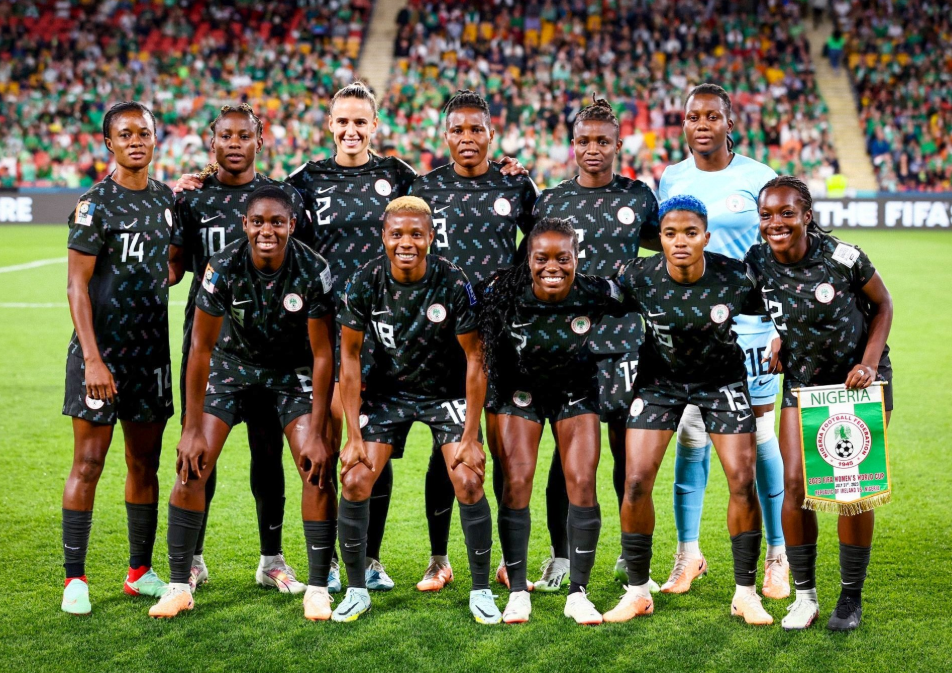
Women’s football in Africa is experiencing a transformation that the global sporting conversation hasn’t yet fully acknowledged. While men’s continental competitions command mainstream attention, something genuinely extraordinary is developing within women’s African football — a competitive ecosystem producing technically sophisticated, athletically exceptional players whose quality increasingly demands recognition on its own terms rather than as footnote to the men’s game.
db bet follows African football development across both genders with genuine analytical investment — recognizing that understanding super falcon players and africa cup of nations players provides essential context for appreciating one of contemporary football’s most compelling ongoing development stories. Nigeria’s Super Falcons occupy a specific position within this story that no other African women’s program has yet approached equivalently.
Nigeria’s Super Falcons: Continental Royalty 👑
The Super Falcons’ dominance of African women’s football represents one of continental sport’s most sustained competitive achievements. Eleven Africa Cup of Nations titles — a record that no other women’s national program across any confederation approaches — reflects institutional depth, coaching investment, and player development infrastructure whose consistency has maintained competitive superiority across generations of squad renewal.
This dominance didn’t emerge accidentally. Nigeria’s women’s football investment, beginning seriously in the 1980s, created development pathways that other African nations simply didn’t prioritize equivalently. The result was a talent pipeline producing players capable of competing at World Cup level consistently — a standard that African women’s football is now demanding as baseline expectation rather than exceptional achievement.
Asisat Oshoala: The Continent’s Greatest 🌟
No examination of super falcon players is complete without engaging seriously with Asisat Oshoala — an attacker whose combination of physical power, technical skill, and competitive intelligence has made her African women’s football’s most decorated individual performer across the past decade.
Six African Women Player of the Year awards represent sustained excellence that transcends single tournament performances into genuine career-defining dominance. Her Champions League success with Barcelona demonstrates that her quality operates at European elite club level rather than merely African continental standard — the distinction that separates very good African players from genuinely world-class performers.
Her presence transforms what Nigeria’s attack attempts tactically — defenders planning specifically around her movement, creating spaces that intelligent teammates exploit in ways that would be unavailable without her specific threat commanding defensive attention.
Rasheedat Ajibade: The Rising Force
Among the current generation of super falcon players, Rasheedat Ajibade represents the most compelling combination of established international experience and continued developmental trajectory. Her performances for Atletico Madrid in Spain’s Primera Iberdrola demonstrate technical quality refined through consistent exposure to Europe’s most competitive women’s football environment.
Her versatility — operating effectively across multiple attacking positions — provides tactical flexibility that coaches value beyond the specific individual qualities that single-position specialists offer. Players who can execute different roles at high quality levels give teams adaptive capacity that rigid tactical frameworks can’t accommodate equivalently.
Nigeria’s attacking future involves Ajibade’s continued development into the senior leadership role that Oshoala has historically occupied — a generational transition that the Super Falcons are navigating with more depth than previous squad renewal moments provided.
Chiamaka Nnadozie: The Last Line
Goalkeeper quality frequently determines continental tournament outcomes more decisively than attacking brilliance — and Chiamaka Nnadozie has established herself as one of African women’s football’s most technically accomplished shot-stoppers across recent competition cycles.
Her Paris FC performances in France’s Division 1 Féminine demonstrate technical development through consistent high-level club competition that national team environments alone can’t provide with equivalent intensity. The specific reflexes, positional understanding, and communication skills that elite goalkeeping demands develop most completely through regular exposure to elite attacking players — exactly what French league competition provides.
Her age — still in her early twenties — combined with already established international experience creates a goalkeeper profile that Nigeria can build defensive structures around for the next decade of continental and World Cup competition.
Africa Cup of Nations: The Continental Stage 🏆
The Women’s Africa Cup of Nations provides the competitive framework within which continental women’s football hierarchies are established, individual reputations are built, and national development programs demonstrate their progress against equivalent regional competition. Understanding the tournament’s structure reveals both its competitive significance and its developmental function within African women’s football’s broader ecosystem.
The tournament’s expansion — more participating nations, improved facilities, and growing broadcast coverage — reflects genuine continental investment recognition that women’s football development requires institutional frameworks matching the competitive ambitions that African women’s programs are increasingly expressing. Each edition produces individual performances that attract European club attention — functioning simultaneously as competitive championship and talent showcase.
South Africa’s Banyana Banyana: The Challengers 🌍
Nigeria’s Super Falcons dominance has faced increasingly serious challenge from South Africa’s Banyana Banyana — a program whose development trajectory has accelerated dramatically through sustained investment, improved coaching infrastructure, and the specific confidence boost that 2023 World Cup participation provided.
Their 2022 Africa Cup of Nations victory — defeating Nigeria in the final — represented the most significant result in South African women’s football history, demonstrating that the Super Falcons’ continental dominance could be genuinely disrupted rather than merely inconvenienced by improving opposition. The psychological significance of that victory extended beyond the trophy — proving to South African players and administrators that their development investment was producing results at the highest continental level.
Thembi Kgatlana: South Africa’s Star
Among africa cup of nations players whose individual quality demands specific attention, Thembi Kgatlana represents South African women’s football’s most compelling current performer — a forward whose pace, technical skill, and goal-scoring instinct make her among the continent’s most dangerous attacking threats in any competitive context.
Her club career spanning Houston Dash, Beijing BG Phoenix, and Atletico Madrid has provided international development exposure that South African women’s football previous generations never accessed equivalently. Each international club environment refined different technical dimensions — creating a more complete attacker than purely domestic development could have produced within comparable timelines.
Cameroon, Morocco, and Emerging Programs
The africa cup of nations players conversation extends beyond Nigeria and South Africa into a broader competitive field whose development represents genuine continental football progress. Cameroon’s Indomitable Lionesses have historically maintained competitive relevance through individual talent emerging despite infrastructure limitations that better-resourced programs don’t face equivalently.
Morocco’s women’s football development has accelerated dramatically — the men’s program’s 2022 World Cup success generating institutional and commercial investment spillover that women’s football is beginning to access through improved training facilities, professional domestic competition, and international exposure opportunities that previously weren’t prioritized.
The European Club Connection
The development pathway for elite africa cup of nations players increasingly runs through European club football — Spanish, French, English, and German clubs providing competitive environments whose technical demands and coaching sophistication accelerate individual development beyond what African domestic leagues currently provide equivalently.
This European connection creates complex developmental dynamics — players improving individual quality through club competition while potentially losing connection to national team tactical systems during preparation periods. Managing this balance — maximizing individual development through European club exposure while maintaining collective national team cohesion — represents the central challenge that African women’s national team coaches navigate across every international window.
What the Future Holds
African women’s football’s trajectory points toward continued competitive development — more players accessing European professional environments, more nations investing seriously in women’s development infrastructure, and the specific competitive quality gap between Africa’s best programs and global women’s football’s elite gradually narrowing.
The super falcon players carrying Nigeria’s continental legacy forward and the broader africa cup of nations players community collectively represent a generation whose performances will determine whether African women’s football translates its genuine talent depth into sustained World Cup competitiveness. The foundation is stronger than it has ever been. The ambition matches it completely.
Read more:Techsslaash.com: Pushing Limits with Powerful Features for Tech Writers
