


Football is a sport whose most compelling dimension is invisible to casual observation. The goals, the individual moments of brilliance, the athletic performances — these are what broadcast cameras capture and what casual fans discuss. But beneath every successful team lies a tactical framework — a coherent philosophy about how the game should be played, how space should be created and denied, and how eleven players should relate to each other — that determines whether individual quality translates into collective achievement. Understanding football style transforms watching from passive entertainment into genuine tactical engagement. Fans following football across every major competition can find dedicated markets at dbbet skachat.
Why Playing Style Defines Football Identity
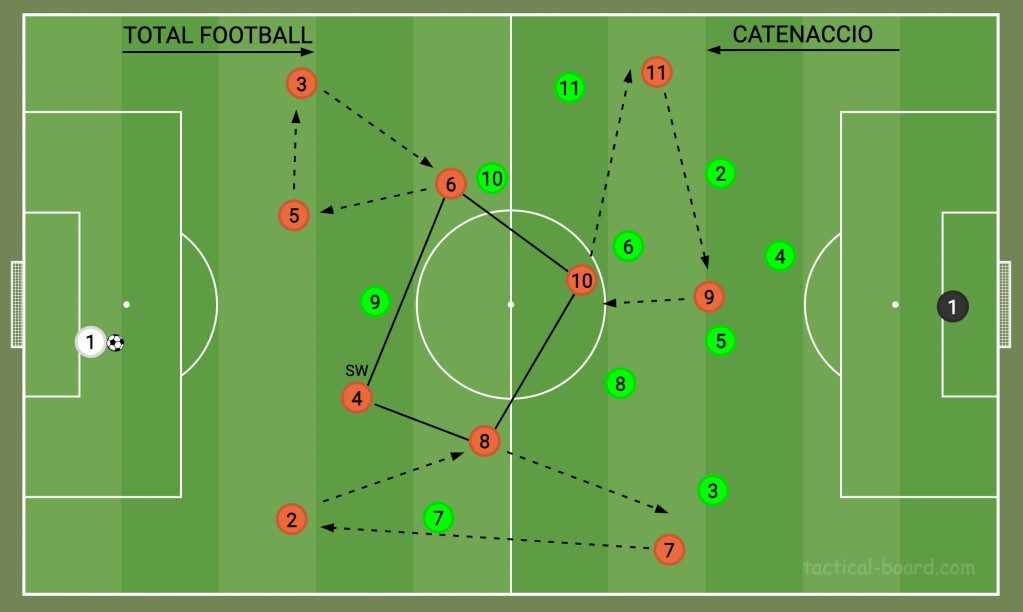
Playing style in football is not merely a tactical choice made before each match — it is a philosophical statement about what the game is for and how it should be expressed. The teams that have become genuinely iconic across football’s history are remembered not primarily for their results but for how those results were achieved. Ajax’s total football in the early 1970s. Barcelona’s tiki-taka under Guardiola. Arrigo Sacchi’s Milan pressing system. These teams created playing identities so coherent and distinctive that their tactical DNA has been transmitted across decades of subsequent coaching influence.
Clubs that change tactical approach with each managerial appointment never develop the deep collective understanding that a sustained style produces — the automatic positional awareness, the ingrained movement patterns, and the shared tactical language that allows teams to make correct decisions simultaneously without explicit coordination.
Soccer Playing Styles: The Main Tactical Categories
Soccer playing styles can be organized into broad categories reflecting different philosophical priorities about how matches are won. Possession-based football — most associated with Guardiola’s teams — prioritizes controlling the ball as the primary defensive and offensive mechanism, believing that suffocating opponents through positional dominance is the most reliable path to victory.
Counter-attacking football accepts periods of defensive organization and uses the space that aggressive opponents leave behind their defensive line as the primary attacking resource. Mourinho’s Inter Milan side that won the 2010 Champions League demonstrated that counter-attacking football at its most sophisticated is deliberately organized to draw opponents forward before exploiting transitions their attacking commitment creates.
High pressing football — popularized by Klopp — treats winning the ball high up the pitch as both a defensive and offensive weapon, forcing opponents into errors in dangerous positions while creating short-distance attacking opportunities. Each style has genuine strengths and vulnerabilities whose balance depends on the personnel available to execute the philosophical demands.
Pressing: Modern Football’s Most Discussed Concept
No tactical concept has been more thoroughly discussed and misunderstood in modern football than pressing — the coordinated effort to win the ball back immediately after losing possession rather than retreating into defensive shape. Pressing in its most sophisticated form is not about individual players chasing the ball but about coordinated team movement that reduces space and time available to opponents simultaneously across multiple areas.
The specific pressing triggers — moments when a team collectively commits to pressure — reflect tactical intelligence that coaches spend enormous preparation time developing. A goalkeeper receiving a back pass. A center back receiving with their weaker foot. Identifying these situations and coordinating collective movement to exploit them requires automatic collective understanding that only sustained shared training produces.
The risk pressing carries is equally important. A pressing team that commits without winning the ball creates disorganized defensive shape that counter-attacks exploit ruthlessly. Knowing when to press and when to drop into organized shape is the specific tactical intelligence that separates effective pressing from energetic but counterproductive chasing.
Soccer Style of Play: Positional Football Explained
Positional football — most completely articulated by Guardiola and the coaching lineage flowing from Johan Cruyff — is perhaps the most intellectually sophisticated soccer style of play in the contemporary game. Its fundamental premise is that controlling space matters more than controlling the ball — that positioning players correctly relative to opponents creates the passing options and defensive coverage that allow teams to dominate structurally rather than through individual quality alone.
The specific concepts positional football employs — numerical superiority in specific zones, width to stretch defensive lines and create central space, exploitation of half-spaces between opposition fullbacks and center backs — require players who understand the game spatially rather than merely technically. This is why Guardiola’s recruitment consistently prioritizes positional intelligence alongside technical quality, and why his teams occasionally release technically gifted players whose positioning does not meet the system’s requirements.
Football Style and Its Relationship to Personnel
Football style is ultimately constrained by the personnel available to execute it — the most theoretically sophisticated tactical system fails when the players required to implement its specific demands are unavailable. The relationship between tactical philosophy and player recruitment is therefore fundamental to understanding why some managers succeed at specific clubs while struggling elsewhere despite unchanged personal tactical sophistication.
Klopp’s pressing system at Liverpool required athletes of specific physical profiles — the capacity to sustain intense pressing across ninety minutes while maintaining technical quality under fatigue — that his squad was specifically recruited to provide. The same system at a club whose recruitment prioritized different qualities produces different results not because the philosophy is wrong but because execution requirements are not met by available personnel.
This relationship also explains why tactical adaptation is a critical coaching quality alongside tactical sophistication. Managers committed to principles rather than rigid implementations sustain success longer across different roster compositions than those whose systems require specific player profiles that turnover eventually disrupts.
Set Pieces: The Undervalued Tactical Dimension
Set piece strategy has emerged as one of modern football’s most significant tactical battlegrounds — a dimension that analytics has revealed contributes far more goals than the sport’s cultural emphasis on open play would suggest. Approximately a quarter to a third of goals across major European leagues are scored from corners, free kicks, and throw-ins — situations whose tactical preparation receives far less public attention despite this statistical significance.
The most analytically sophisticated clubs now employ dedicated set piece coaches designing attacking routines and defensive organizations for these situations. Brentford’s set piece excellence under Thomas Frank — disproportionately contributing to results their overall resource level would not otherwise have predicted — became one of European football’s most discussed examples of tactical investment generating genuine competitive advantage that financial resources alone could not have produced.
How Tactical Style Determines Transfer Strategy
The relationship between playing style and transfer recruitment creates one of modern football’s most important organizational dynamics. Clubs whose tactical identity is clearly defined recruit with precision that generates roster quality exceeding financial investment, while clubs whose tactical direction is unclear spend resources on players whose qualities do not complement each other effectively within any coherent system.
Liverpool’s recruitment under Klopp consistently identified players whose specific attributes suited the pressing and transitional system — pace, work rate, and the technical profiles that high-tempo football requires — rather than pursuing generally excellent players whose qualities might not fit the tactical context. The results, measured in competitive success relative to financial investment compared with rivals spending comparable amounts, validated the recruitment precision that tactical clarity enables across multiple transfer windows.
Why Tactical Understanding Makes Football Better to Watch
Engaging with football’s tactical dimensions transforms watching from passive observation of outcomes into active appreciation of the processes producing them. Recognizing when a pressing trap is being set and watching whether it succeeds. Understanding why a fullback’s inside position creates a passing option opening the opponent’s defensive structure. Seeing how a team’s defensive block deliberately invites the ball wide to force crosses rather than allowing central penetration — these observations make every minute carry analytical interest that pure result-focus cannot generate.
The tactical conversation around football has never been richer — the analytical tools, coaching education content, and tactical journalism available to interested fans create genuine access to the intellectual framework that professional football’s most sophisticated practitioners apply. Investing in that understanding rewards every subsequent hour of football watching with depth that transforms even modest matches into genuinely fascinating competitive puzzles.
